Why Industrial Space Is in High Demand Across Texas
A look at the supply and demand forces driving industrial leasing across major Texas markets.


Industrial property has quietly become one of the most reliable performers in Texas commercial real estate. Headlines tend to focus on office towers and shiny retail centers, but the warehouses, distribution centers, and flex buildings that keep goods moving have seen steady demand for years. Understanding why helps owners, tenants, and investors make better decisions in a market that shows little sign of slowing down.
The forces behind the demand
Several trends have come together to support industrial space across the state. The growth of online shopping changed how companies store and ship products, pushing them to lease space closer to the customers they serve. At the same time, many businesses decided to hold more inventory rather than rely on long and fragile supply chains. Both shifts require square footage, and a large share of it has landed in Texas.
Geography plays a major role. Texas sits along major north to south and east to west freight routes, with access to ports, rail, and a dense network of interstate highways. A product that arrives in Houston or crosses the border at Laredo can reach a wide share of the country within a day or two by truck. For companies that compete on delivery speed, that location is hard to beat.
Population growth reinforces the trend
People continue to move to Texas, and businesses follow them. A larger population means more consumer demand, more construction, and more of the everyday distribution that industrial buildings support. Dallas and Fort Worth, Houston, San Antonio, and Austin have all seen new industrial development to keep pace, and smaller markets along the major corridors have benefited as well.
Location near highways, rail, and a large workforce remains the single most important factor in how quickly an industrial building leases.
What owners should keep in mind
Strong demand has generally supported rents and kept vacancy low in well located buildings. That is good news for owners, but it does not mean every building performs the same. Tenants pay close attention to practical features that affect how they operate day to day.
- Clear height, or the usable vertical space inside, determines how much a tenant can store.
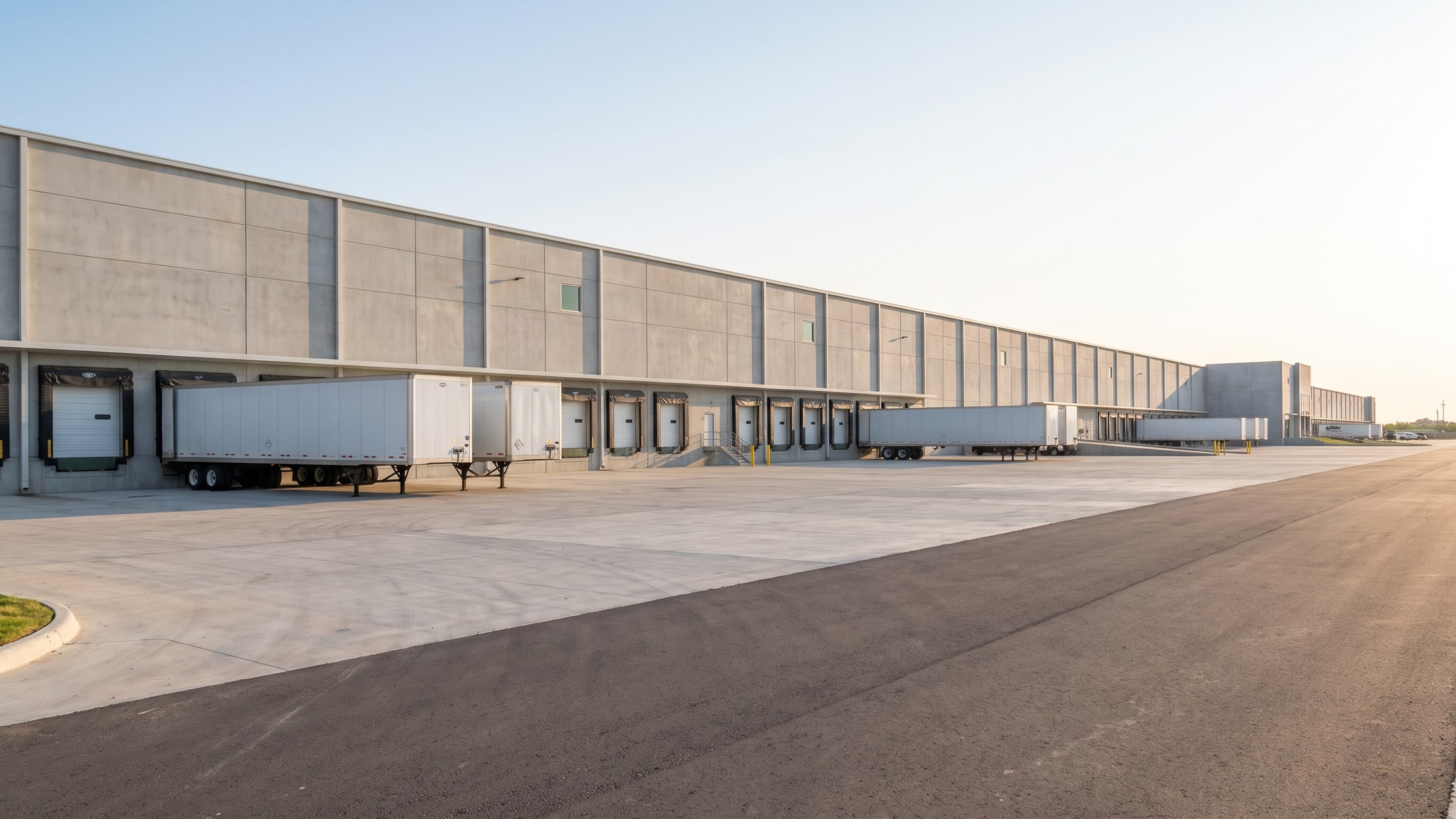
- The number and type of dock doors affects how quickly trucks can load and unload.
- Power capacity matters more than ever as tenants add automation and equipment.
- Truck court depth and trailer parking can make or break a site for a distribution user.
Owners who keep these features in good condition, and who understand what tenants in their submarket actually need, tend to see shorter vacancy periods and stronger renewals. A building that photographs well but cannot handle modern truck traffic will struggle against newer competition.
What tenants should plan for
For businesses that need space, the main lesson is to plan early. Quality buildings with the right specifications can lease quickly, and the best options are often gone before a company that waited too long begins its search. Growing businesses in particular benefit from thinking a step ahead, since moving operations is expensive and disruptive.
It also helps to be realistic about tradeoffs. A building with ideal highway access may cost more per square foot, while a site a little farther out may offer better rates and room to expand. The right choice depends on how a company balances transportation costs, labor availability, and rent over the length of the lease.
The road ahead
No property type is completely protected from wider economic cycles, and industrial is no exception. Interest rates, construction costs, and shifts in consumer spending all influence how much new space gets built and how quickly it fills. Even so, the underlying reasons for Texas industrial demand, including location, population growth, and the ongoing changes in how goods move, appear durable.
For anyone weighing a decision in this part of the market, the fundamentals reward preparation. Owners who invest in the right features and tenants who plan ahead are both in a stronger position than those who react at the last minute. In a state that keeps growing, industrial space is likely to remain a core part of the commercial real estate picture for years to come.
Subscribe to our newsletter
Lorem ipsum dolor sit amet consectetur vitae commodo nunc donec scelerisque nulla arcu lacus risus eu nulla enim ultricies cursus in